Brute Force Keygen Download
Skedda is an online booking and scheduling platform used by thousands of venues around the world.The platform is designed to streamline the management of ‘space’. Skedda is suitable for venues with meeting rooms, coworking spaces, community facilities, classrooms, studios, sports courts or any other bookable space.Skedda is mobile-friendly and highly customizable with venues able to dictate pricing, booking conditions and exceptions, space sharing rules and much more. As Skedda is an officially-verified Stripe partner, venues are also able to take secure online payments upfront or using Skedda’s unique book now, pay later module.Alongside a host of impressive features such as iCal integration and brand coloring, Skedda integrates with Zapier, allowing users to connect to over 1000 of the web’s best applications.Core features of the platform are available for free with paid plans for monthly subscriptions. Acunetix is the market leader in automated web application security testing, and is the tool of choice for many Fortune 500 customers. Acunetix detects and reports on a wide array of web application vulnerabilities. The Acunetix industry leading crawler fully supports HTML5 and JavaScript and Single-page applications, allowing auditing of complex, authenticated applications.
Acunetix provides the only technology on the market that can automatically detect out-of-band vulnerabilities and is available both as an online and on premise solution.
Brute Force Keygen Download Pc
The 's US$250,000 contained over 1,800 custom chips and could brute-force a DES key in a matter of days. The photograph shows a DES Cracker circuit board fitted on both sides with 64 Deep Crack chips.In, a brute-force attack consists of an attacker submitting many or with the hope of eventually guessing correctly.
The attacker systematically checks all possible passwords and passphrases until the correct one is found. Alternatively, the attacker can attempt to guess the which is typically created from the password using a. This is known as an exhaustive key search.A brute-force attack is a that can, in theory, be used to attempt to decrypt any encrypted data (except for data encrypted in an manner).
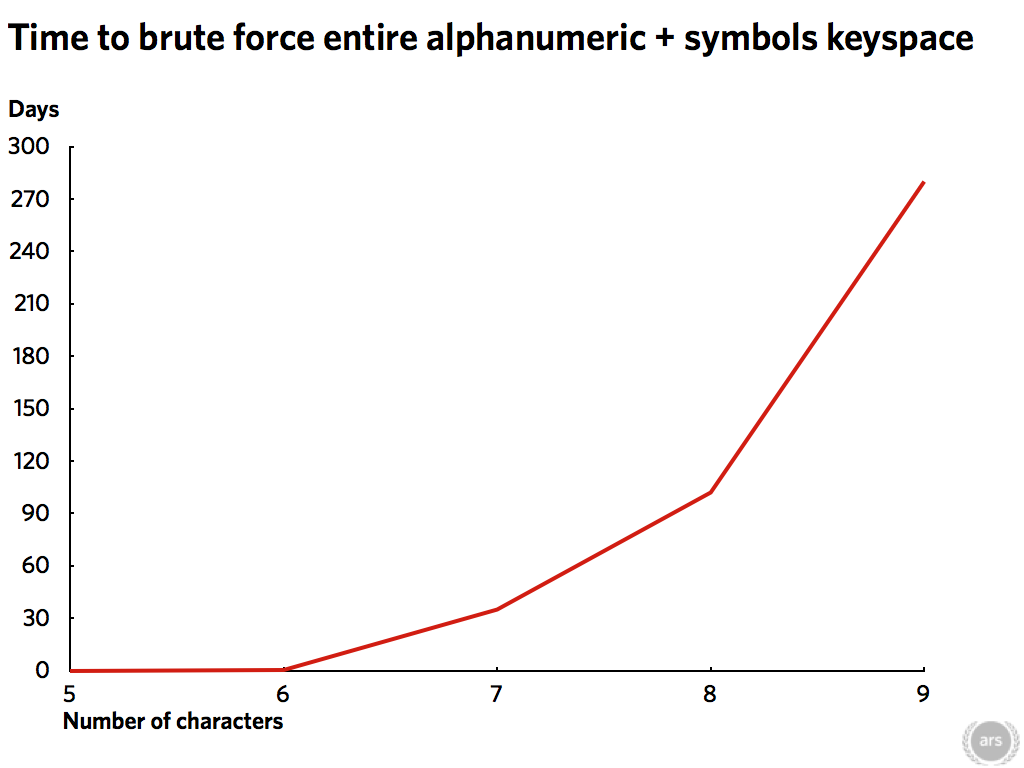
Such an attack might be used when it is not possible to take advantage of other weaknesses in an encryption system (if any exist) that would make the task easier.When password-guessing, this method is very fast when used to check all short passwords, but for longer passwords other methods such as the are used because a brute-force search takes too long. Longer passwords, passphrases and keys have more possible values, making them exponentially more difficult to crack than shorter ones.Brute-force attacks can be made less effective by the data to be encoded making it more difficult for an attacker to recognize when the code has been cracked or by making the attacker do more work to test each guess. One of the measures of the strength of an encryption system is how long it would theoretically take an attacker to mount a successful brute-force attack against it.Brute-force attacks are an application of, the general problem-solving technique of enumerating all candidates and checking each one. Contents.Basic concept Brute-force attacks work by calculating every possible combination that could make up a password and testing it to see if it is the correct password. As the password's length increases, the amount of time, on average, to find the correct password increases exponentially.Theoretical limits The resources required for a brute-force attack grow with increasing, not linearly. Although U.S. Export regulations to 56-bit (e.g. Twin usb gamepad driver.
), these restrictions are no longer in place, so modern symmetric algorithms typically use computationally stronger 128- to 256-bit keys.There is a physical argument that a 128-bit symmetric key is computationally secure against brute-force attack. The so-called implied by the laws of physics sets a lower limit on the energy required to perform a computation of kT ln 2 per bit erased in a computation, where T is the temperature of the computing device in, k is the, and the of 2 is about 0.693. No irreversible computing device can use less energy than this, even in principle. Thus, in order to simply flip through the possible values for a 128-bit symmetric key (ignoring doing the actual computing to check it) would, theoretically, require 2 128 − 1 bit flips on a conventional processor. If it is assumed that the calculation occurs near room temperature (300 K), the Von Neumann-Landauer Limit can be applied to estimate the energy required as 10 18, which is equivalent to consuming 30 of power for one year.
This is equal to 30×10 9 W×3 s = 9.46×10 17 J or 262.7 TWh. The full actual computation – checking each key to see if a solution has been found – would consume many times this amount. Furthermore, this is simply the energy requirement for cycling through the key space; the actual time it takes to flip each bit is not considered, which is certainly.However, this argument assumes that the register values are changed using conventional set and clear operations which inevitably generate.
It has been shown that computational hardware can be designed not to encounter this theoretical obstruction (see ), though no such computers are known to have been constructed. Modern are well-suited to the repetitive tasks associated with hardware-based password crackingAs commercial successors of governmental solutions have become available, also known as, two emerging technologies have proven their capability in the brute-force attack of certain ciphers. One is modern (GPU) technologythe other is the (FPGA) technology. GPUs benefit from their wide availability and price-performance benefit, FPGAs from their energy efficiency per cryptographic operation. Both technologies try to transport the benefits of parallel processing to brute-force attacks.
In case of GPUs some hundreds, in the case of FPGA some thousand processing units making them much better suited to cracking passwords than conventional processors.Various publications in the fields of cryptographic analysis have proved the energy efficiency of today's FPGA technology, for example, the FPGA Cluster computer consumes the same energy as a single PC (600 W), but performs like 2,500 PCs for certain algorithms. A number of firms provide hardware-based FPGA cryptographic analysis solutions from a single FPGA card up to dedicated FPGA computers. and encryption have successfully been brute-force attacked by reducing the workload by a factor of 50 in comparison to conventional CPUs and some hundred in case of FPGAs. A single COPACOBANA board boasting 6 Xilinx Spartans – a cluster is made up of 20 of thesepermits the use of 256-bit keys. Breaking a symmetric 256-bit key by brute force requires 2 128 times more computational power than a 128-bit key.
Fifty supercomputers that could check a billion billion (10 18) AES keys per second (if such a device could ever be made) would, in theory, require about 3×10 51 years to exhaust the 256-bit key space.An underlying assumption of a brute-force attack is that the complete keyspace was used to generate keys, something that relies on an effective, and that there are no defects in the algorithm or its implementation. For example, a number of systems that were originally thought to be impossible to crack by brute force have nevertheless been because the to search through was found to be much smaller than originally thought, because of a lack of entropy in their.
These include 's implementation of (famously cracked by and in 1995 ) and a / edition of discovered in 2008 to be flawed. A similar lack of implemented entropy led to the breaking of code. Credential recycling Credential recycling refers to the practice of re-using username and password combinations gathered in previous brute-force attacks. A special form of credential recycling is, where hashed credentials are stolen and re-used without first being brute forced.Unbreakable codes Certain types of encryption, by their mathematical properties, cannot be defeated by brute force. An example of this is cryptography, where every bit has a corresponding key from a truly random sequence of key bits.
A 140 character one-time-pad-encoded string subjected to a brute-force attack would eventually reveal every 140 character string possible, including the correct answer – but of all the answers given, there would be no way of knowing which was the correct one. Defeating such a system, as was done by the, generally relies not on pure cryptography, but upon mistakes in its implementation: the key pads not being truly random, intercepted keypads, operators making mistakes – or other errors. Countermeasures In case of an offline attack where the attacker has access to the encrypted material, one can try key combinations without the risk of discovery or interference. However database and directory administrators can take countermeasures against online attacks, for example by limiting the number of attempts that a password can be tried, by introducing time delays between successive attempts, increasing the answer's complexity (e.g. Requiring a answer or verification code sent via cellphone), and/or locking accounts out after unsuccessful logon attempts.
Website administrators may prevent a particular IP address from trying more than a predetermined number of password attempts against any account on the site. Reverse brute-force attack In a reverse brute-force attack, a single (usually common) password is tested against multiple usernames or encrypted files. The process may be repeated for a select few passwords. In such a strategy, the attacker is generally not targeting a specific user.Software that performs brute-force attacks.See also. and.Notes.;;; (June 10–12, 1996). On Applying Molecular Computation To The Data Encryption Standard.
Proceedings of the Second Annual Meeting on DNA Based Computers. Burnett, Mark; Foster, James C. Syngress.
Diffie, W.; Hellman, M.E. 'Exhaustive Cryptanalysis of the NBS Data Encryption Standard'.
10: 74–84. Graham, Robert David (June 22, 2011). Retrieved August 17, 2011. Ellis, Claire. Plus Magazine. Kamerling, Erik (November 12, 2007).
Kingsley-Hughes, Adrian (October 12, 2008). Landauer, L (1961). IBM Journal of Research and Development.
Brute Forcing Download Ps3
5. Paar, Christof; Pelzl, Jan; Preneel, Bart (2010). Springer. Reynard, Robert (1997). Jacksonville, FL: Smith & Daniel Marketing.
Retrieved September 21, 2008. Ristic, Ivan (2010). Feisty Duck.; Messier, Matt; Chandra, Pravir (2002). Retrieved November 25, 2008.
Wiener, Michael J. 'Efficient DES Key Search'.
Practical Cryptography for Data Internetworks. Stallings, editor, IEEE Computer Society Press. May 16, 2008.
Retrieved August 10, 2008. January 15, 2009.External links. designed to guess the passcode of locked running.
Brute Force Keygen Download Torrent
– Essay by the winning team of the challenge in.