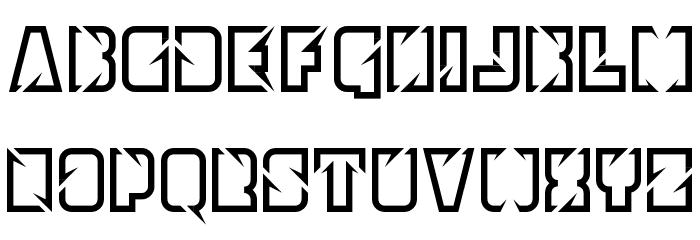
Waverly Rr Font
Old DT&I Railroad mapIn 1901, the merger of the and the formed the Detroit Southern Railroad. This company was purchased at foreclosure on May 1, 1905, by Harry B. Hollins & Company of New York, which reincorporated it in the state of Michigan under the name of the Detroit, Toledo & Ironton Railway.The president of the Detroit Southern, Samuel Hunt, was to remain as president of the reorganized road but died suddenly on May 15, 1905. George Miller Cumming, a New York City lawyer who was formerly first vice-president of the Erie Railroad Company and the former chairman of the board of the Cincinnati, Hamilton & Dayton Railroad, was elected president in June and served for one month. Durban was elected president in July but resigned in November, and replaced by Eugene Zimmerman. Cumming and Durban continued to serve as officers under Zimmerman's presidency.The DT&I went in 1908, but remained solvent until it was purchased by in 1920. Ford recognized the strategic importance of the line to his business; the line connected, to all of the major east-west rail lines in the.
This gave Ford direct control over shipments of raw materials and finished to and from his in Dearborn.Under Ford's management, the line thrived. In the words of a later historian, 'the line was transformed from a streak of rust into an extremely efficient and profitable operation, the likes of which has or will seldom be seen in this country.' Ford double-tracked the Detroit area main lines, and made a deal with the workers that they would take better care of the equipment in exchange for unusually high wages. Moreover, Ford funded the purchase of new equipment.
For the daily Detroit- train, the DT&I purchased a pair of; for the intensive Detroit-area freight service, the line electrified as far as yard. Ford hoped to electrify the entire line, and thence to an interchange with the, but electrified at 22 kV 25 Hz AC, the wrong voltage for interoperable equipment (the Virginian electrified at 11 kV AC). The concrete catenary masts of the electric years survived for decades after de-electrification, as it was deemed too expensive to demolish them; some remain today.in 1929, Ford sold the line to a subsidiary of the after becoming disgusted with what he considered interference and over-regulation from the.
In 1930, the railroad de-electrified in favor of standard equipment. Ann Arbor Railroad In June 1905, the Detroit, Toledo & Ironton Railway took control of the (AA), which they purchased from Rudolph Kleybolte & Co.
The acquisition connected Toledo with Frankfort, Michigan, and essentially doubled the DT&I system. But the 1908 bankruptcy forced the DT&I to divest its acquisition.In 1963, the DT&I, by then a subsidiary of the, once again gained control of the AA.

The Ann Arbor lines became part of in April 1976, and were facing abandonment. In October 1977, they were purchased by the state of Michigan, which intended to preserve rail service over its tracks.
In 1977 Michigan Interstate was designated operator of the entire line from Toledo to Frankfurt. A series of disputes arose during the early 1980's and multiple railroads were designated by the tracks owners, the State of Michigan, to operate the line. The line from Toledo to just south of Osmer (a passing siding north of Ann Arbor) was sold to the trustee for the estate purchased the remaining portion of the Michigan Interstate from Toledo, Ohio to Ann Arbor, Michigan in September 1985. The line north of Osmer remains under the ownership of the State of Michigan, except where the tracks have been removed. For a period in the 1980's three different companies operated the Ann Arbor tracks.
Michigan Interstate operated from Toledo to Osmer. Tuscola and Saginaw Bay from Osmer north to Alma, and the Michigan Northern operated north of Alma. The collapse of the Michigan Northern resulted in the Tuscola and Saginaw Bay taking all operations north of Osmer. The Tuscola and Saginaw Bay later re-branded itself as the Great Lakes Central, the current operator of all remaining lines north of Osmer.
The Michigan Interstate trackage was sold in 1988 to the Ann Arbor Acquisition Corporation, who later sold the line to WATCO, the current operator the segment from Toledo to Osmer. Work Train, circa 1921 The Pennsylvania years The line operated as an independent subsidiary of the from 1929 until 1970. In 1955, the line replaced its steam locomotives with diesel locomotives. The DT&I relied exclusively on diesel locomotives built by.The later years In 1968, the DT&I's parent company, the Pennsylvania Railroad, merged with its longtime rival, the, to become the, which declared two years later and sold off the DT&I to private investors. In 1980, the DT&I was acquired by the (GTW). Under the GTW, the DT&I locomotives were painted in the red and blue livery of the GTW, but retained the DT&I logo.
In December 1983, the DT&I was completely assimilated into the GTW.End of service on southern portion. Detroit, Toledo and Ironton at CP Hill in Melrose Park in April 1985In April 1982, a collapse in Royersville Tunnel (the only tunnel on the old DT&I) prompted GTW to shut down the line between Jackson and Ironton. The tunnel had suffered collapses many times in the past but limited remaining business south of Jackson and the operational problems of the tunnel led to GTW's decision. At the same time, GTW bypassed the steep and treacherous Summithill section between Bainbridge and Waverly by rerouting trains onto Chessie System trackage from to Waverly, then back onto the former DT&I to Jackson.
In 1984 all operations south of Washington Court House were suspended, the Jackson Shops closed, and the track dismantled.A short section of the DT&I main west out of Jackson is still in place serving as a connection from industries to the only remaining line into Jackson. A short section of the DT&I north from the junction with the B&O Southwestern near Greenfield is still in place to serve local industry.
Utah Belt Rr Font
Portions of the line between Greenfield and Washington Court House were purchased by Washington Court House with the intention of creating a rail-trail, but they were unable to acquire enough conjoined sections to build a trail.Central and northern portions. 1925 DT & I RR caboose on display atGTW continued to operate the northern and central portions of the former DT&I as part of their network for many years. The DT&I trackage from Springfield to Lurray (near Washington Court House) was sold by GTW to the West Central Ohio Port Authority (formerly Clark County - Fayette County Port Authority) January 18, 1991. This section was then operated in conjunction with the former section of the B&O Toledo Division from Lurray to Washington Court House by the, a division of Railtex. In 1997, GTW sold the former DT&I from Dundee (Diann) Michigan to Springfield, Ohio to the Indiana and Ohio Railway. Included in the sale was trackage rights from Dundee to Flat Rock, MI over the old DT&I.
Railtex was merged into, which was then purchased. G&W operates the former DT&I from Dundee (Diann) Michigan to Washington Court House, still as part of their Indiana and Ohio Railway.Cities and towns along the Detroit, Toledo and Ironton. Landrum (1998-01-07). The Detroit, Toledo and Ironton Railroad Historical Web Site. Retrieved 2013-02-23., June 9, 1905. 610. Scott D.
The Detroit, Toledo and Ironton Railroad: Henry Ford's Railroad. Fletcher, Ohio: Cam-Tech Publishing, 1988.
Archived from on 19 December 2003. Retrieved 2009-04-16. ^ Van Hattem, Mark; Hemphill, Mark W. 'Trackside Guide No. 3 — Detroit, Michigan'. 63 (6): S1–12. (PDF).
June 9, 1905. Missing or empty title= Sources.External links.
Waverly Rr Font Download
Webfont KitThe license for this font is the SIL OFL license. This license does not allow us to redistribute derivative versions of the font without wholesale name changes inside and out of the font. Until we figure out a reasonable method of delivering these to you and complying with the license, you will have to use the yourself on these, renaming the fonts appropriately.If you are the designer of this font, and this was an unintended consequence of using the OFL license, and give us permission to allow webfont conversions. FontsRaleway Thin 672 GlyphsRaleway Thin Italic 572 GlyphsRaleway ExtraLight 672 GlyphsRaleway ExtraLight Italic 572 GlyphsRaleway Light 672 GlyphsRaleway Light Italic 572 GlyphsRaleway Regular 672 GlyphsRaleway Italic 572 GlyphsRaleway Medium 672 GlyphsRaleway Medium Italic 572 GlyphsRaleway SemiBold 672 GlyphsRaleway SemiBold Italic 572 GlyphsRaleway Bold 672 GlyphsRaleway Bold Italic 572 GlyphsRaleway ExtraBold 672 GlyphsRaleway ExtraBold Italic 572 GlyphsRaleway Black 672 GlyphsRaleway Black Italic 572 Glyphs. Raleway is an elegant sans-serif typeface family. Initially designed by Matt McInerney as a single thin weight, it was expanded into a 9 weight family by Pablo Impallari and Rodrigo Fuenzalida in 2012 and iKerned by Igino Marini.It is a display face and the download features both old style and lining numerals, standard and discretionary ligatures, a pretty complete set of diacritics, as well as a stylistic alternate inspired by more geometric sans-serif typefaces than its neo-grotesque inspired default character set.It also has a sister family, Raleway Dots.Documentation can be found at www.theleagueofmoveabletype.com and www.impallari.com. To contribute to the project contact Matt McInerney or Pablo Impallari.
Downloads:4,519,954Uploaded on:February 23, 2010Designed by:Classification:Tags:,Languages:Some Fonts Also Support.